
The method
The dry dock, refused.
OLSM · On-Land Shipbuilding Method · Unprecedented at establishment
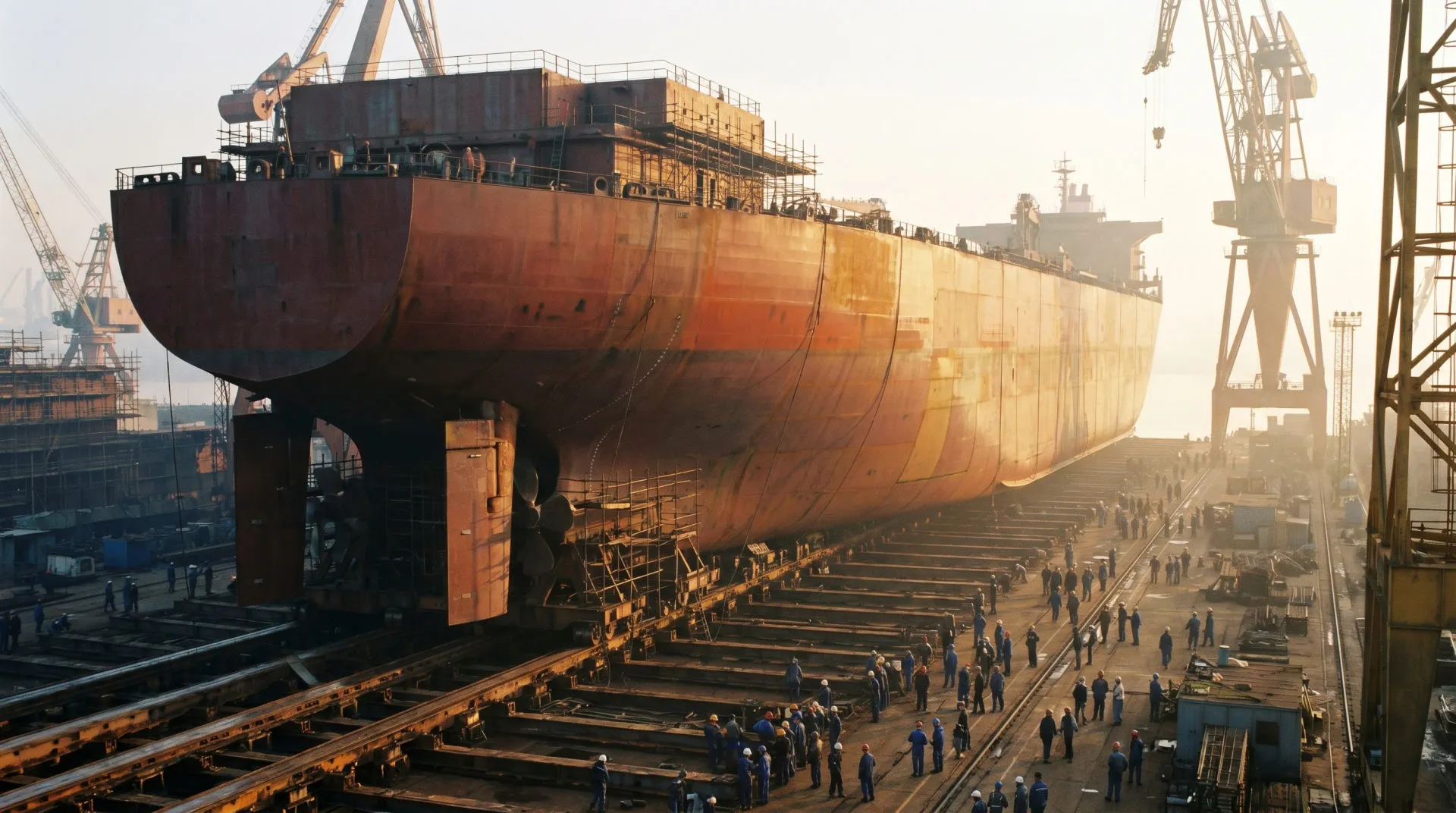
Every shipbuilder in history accepted two rules: no large vessel without a dry dock, and no horizontal launch from land. Sungdong was founded on the refusal of both.
0 hrs
World-record launch, 2008
0 days
From launch to delivery of a 170,000DWT bulker, against a conventional 30 to 45
Gripper-jacks Translift System
From rail to open water, in six moves.
Assemble on land
The entire vessel is built whole over skid rails, in the open, under Goliath cranes. No dock walls limit its size.
Grip and lift
Gripper-jacks take the finished hull on oil pressure, thousands of tons raised in a controlled breath.
Travel the rail
A bogie train carries the vessel along the skid rails toward the water, moved by the push-pull hydraulic system.
Load out
The ship transfers onto a semi-submersible floating dock moored level with the rail.
Submerge
The dock moves to the launching area and takes on ballast, settling gently below the waterline.
Afloat
The vessel rises free. From rail to open water in hours, not days.
Patents 10-0770737 · 10-0839983 · Korean Intellectual Property Bureau
The supporting inventions
One method, many patents.

Side-shifting
Load-out from anywhere in the yard, not only the build lane. Patented; it multiplied the turnover of every berth.
Ring pre-erection
Hull bottom and topsides assembled together and loaded as one ring. On a 170,000DWT vessel it saved 28 blocks and 13 days.
Multi-point erection
Several loading points on one rail, so blocks join the hull without waiting for a crane window.
Push-pull system
Paired hydraulic cylinders move a vessel with half the force of single-mobilization systems.
GENI letter welding
A robot developed in-house engraves each ship's name into the steel. Even the signature is welded.
The yards that built the record
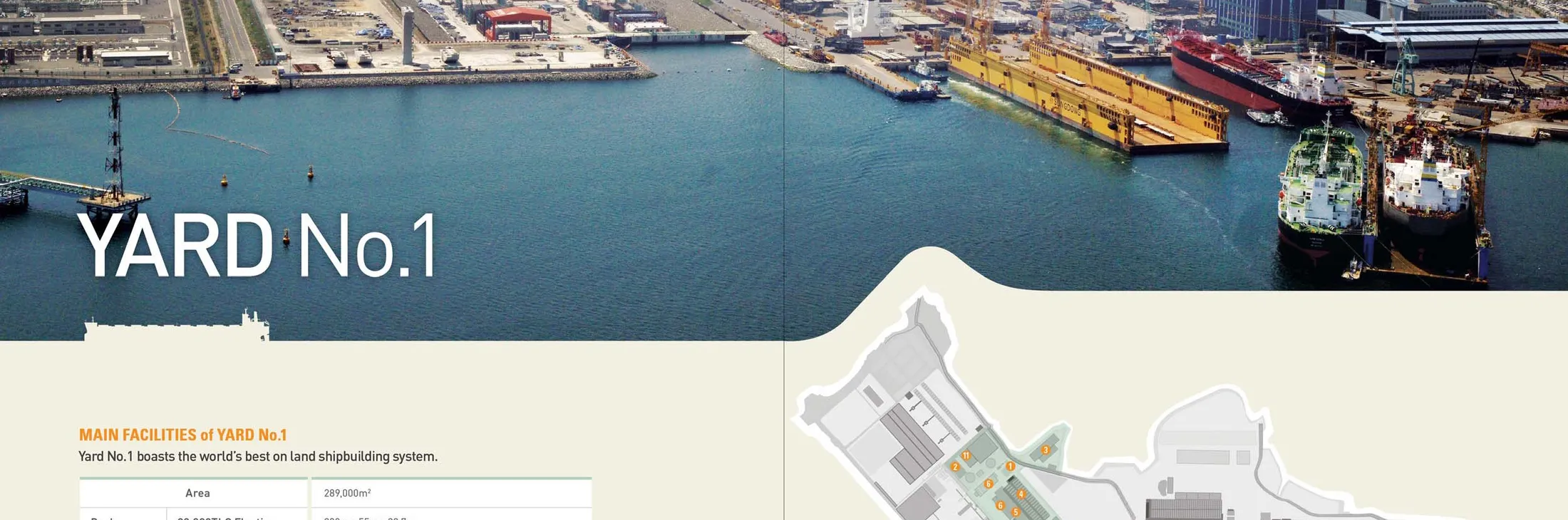
Four yards. One method.
The Korean yards of the record era, on the Southern Coast Shipbuilding Belt. Their method now travels to the Gulf.
Where it goes next